
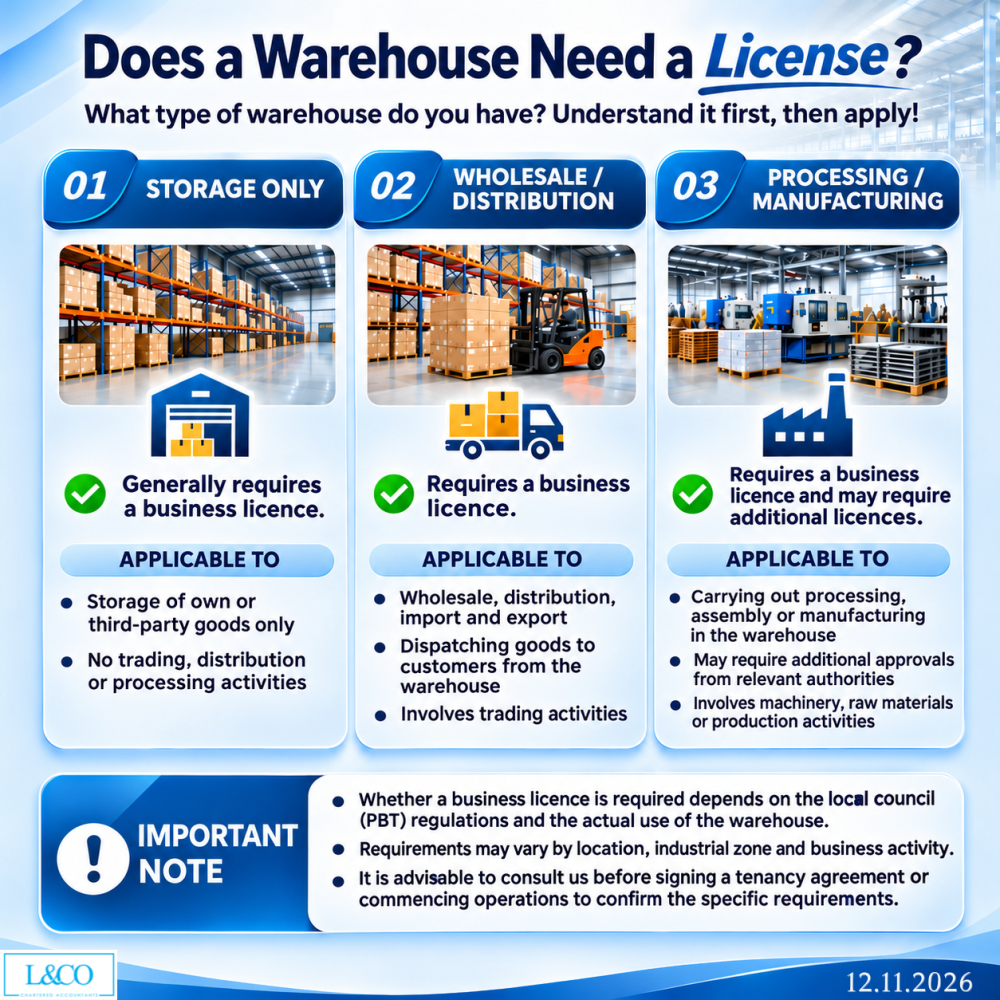
Warehouses in Malaysia serve various purposes, from storing goods to supporting wholesale distribution, logistics, processing and manufacturing operations.
One common question among business owners is:
Does operating a warehouse require a business license in Malaysia?
The licensing requirements depend on several factors, including the actual use of the premises, business activities, location and regulations imposed by the relevant Local Authority (PBT).
Understanding these requirements is important before renting warehouse premises or commencing business operations.
1. Storage-Only Warehouses
Storage-only warehouses are primarily used for keeping goods, inventory or materials without conducting trading, distribution, processing or manufacturing activities.
Common activities include:
- Storage of company inventory
- Storage of third-party goods
- General warehousing and inventory management
Licensing Requirements
A storage-only warehouse may still require a Business Premises License or other relevant approvals, depending on the requirements of the local council.
The applicable requirements should be confirmed based on the premises’ location, approved building use and relevant regulations.
2. Wholesale and Distribution Warehouses
Warehouses used for wholesale, distribution, import and export activities typically involve the commercial movement of goods.
Common activities include:
- Wholesale trading and distribution
- Import and export operations
- Dispatching goods to customers
- Inventory and order fulfilment
Licensing Requirements
Businesses generally need to obtain the appropriate Business Premises License and assess whether additional permits or industry-specific requirements apply.
Companies involved in foreign-owned distribution activities may also need to consider applicable regulatory requirements.
3. Processing and Manufacturing Warehouses
A warehouse used for processing, assembly or manufacturing may be subject to additional regulatory requirements beyond those applicable to ordinary storage facilities.
Common activities include:
- Product processing and assembly
- Manufacturing operations
- Raw material handling
- Production and packaging activities
Licensing Requirements
Depending on the nature and scale of operations, businesses may need to consider:
- MIDA Manufacturing Licence or applicable exemption confirmation
- Department of Environment (DOE) requirements
- Department of Occupational Safety and Health (DOSH) requirements
- Building-use approvals, fire safety requirements and other relevant permits
Not all manufacturing businesses require every approval listed above. The applicable requirements depend on statutory thresholds, activities and specific regulatory conditions.