

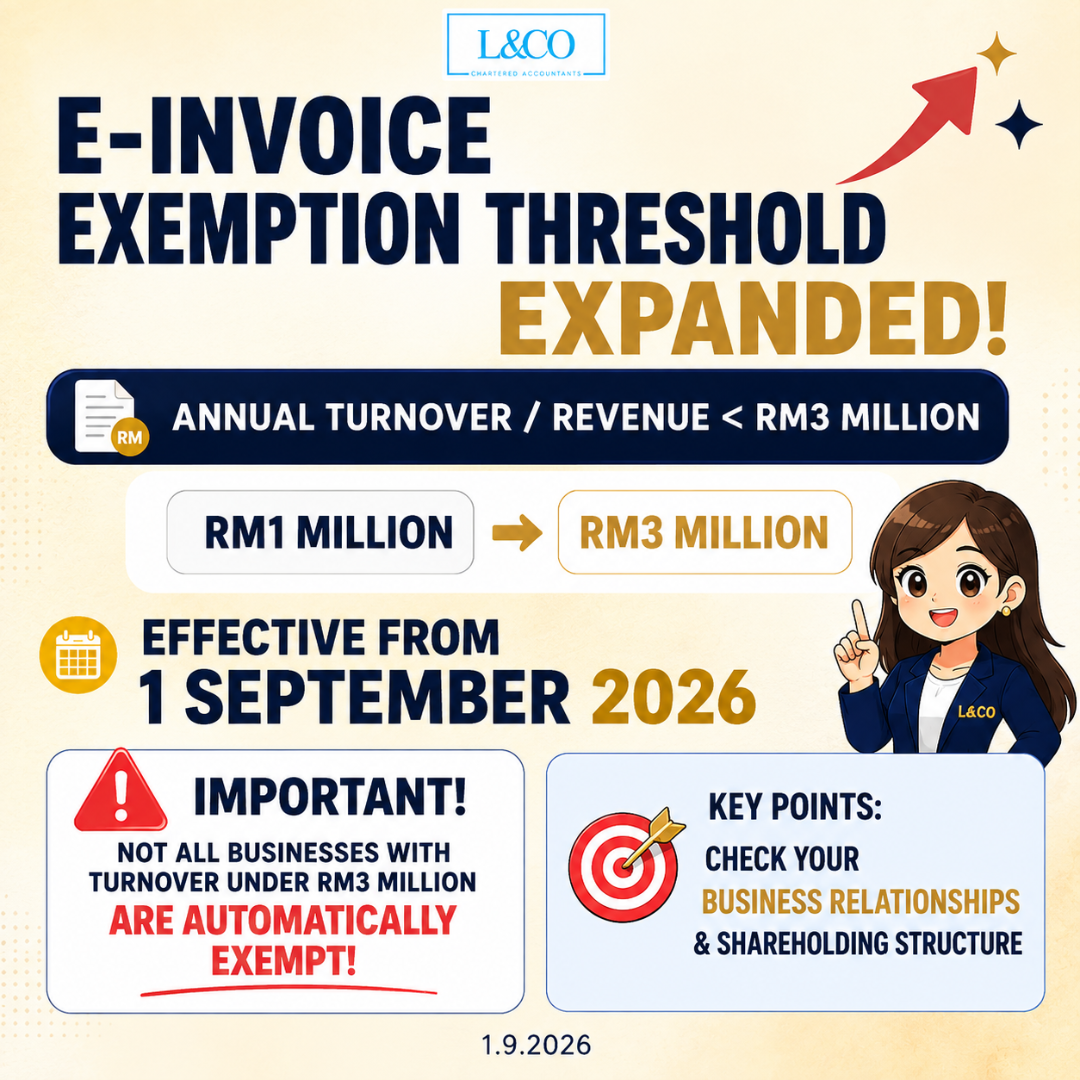
Malaysia’s e-Invoice requirements continue to evolve. Under the latest e-Invoice Guideline, eligible taxpayers with an annual turnover or revenue of less than RM3 million may qualify for an e-Invoice exemption.
However, businesses should note that having an annual turnover or revenue below RM3 million does not automatically mean that the exemption applies. Businesses must also review their shareholding structure, holding company relationship, and any related company or joint venture arrangements to determine whether they genuinely qualify for the exemption.
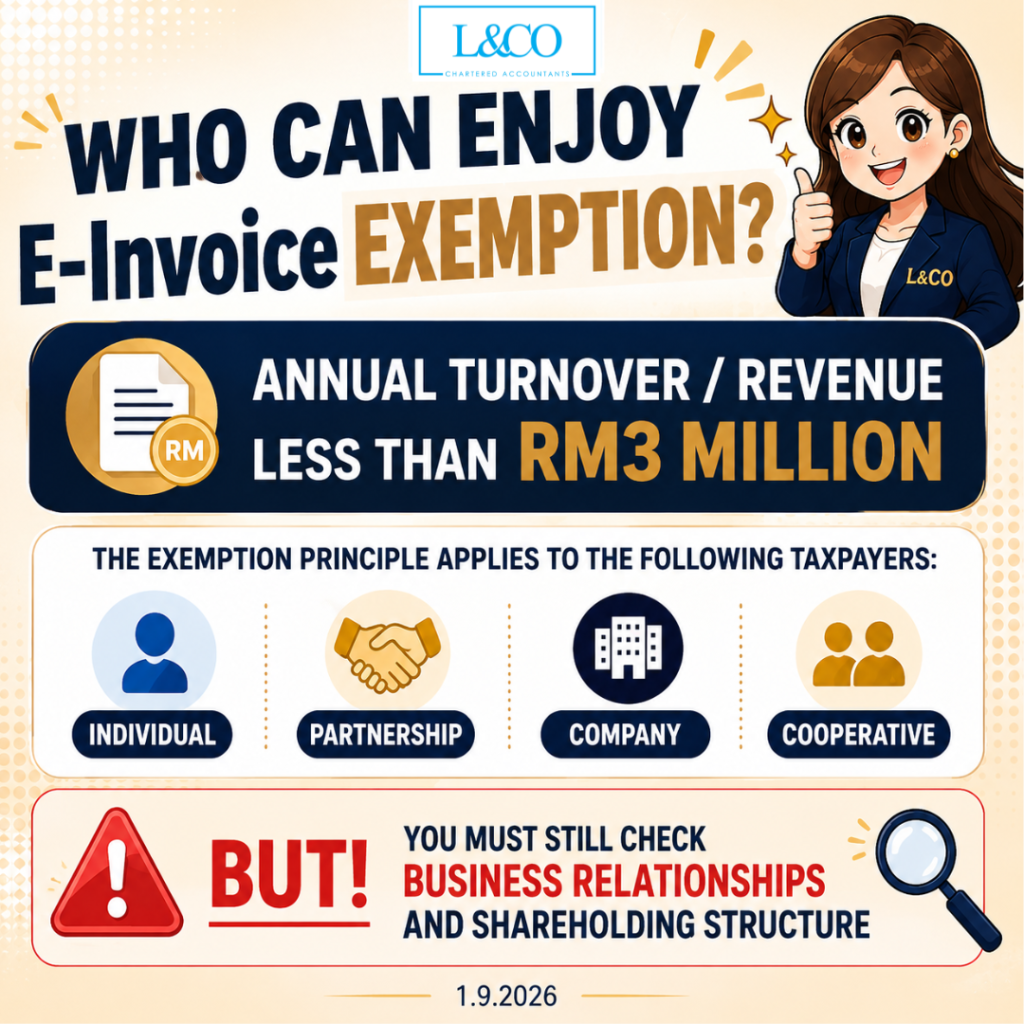
Who May Qualify for the e-Invoice Exemption?
The exemption principle for taxpayers below the RM3 million threshold applies across different categories of taxpayers, including:
- Individuals
- Partnerships
- Companies
- Co-operative societies
However, businesses should not assess their eligibility based solely on their own annual turnover or revenue. Their corporate relationships and shareholding structure must also be considered.
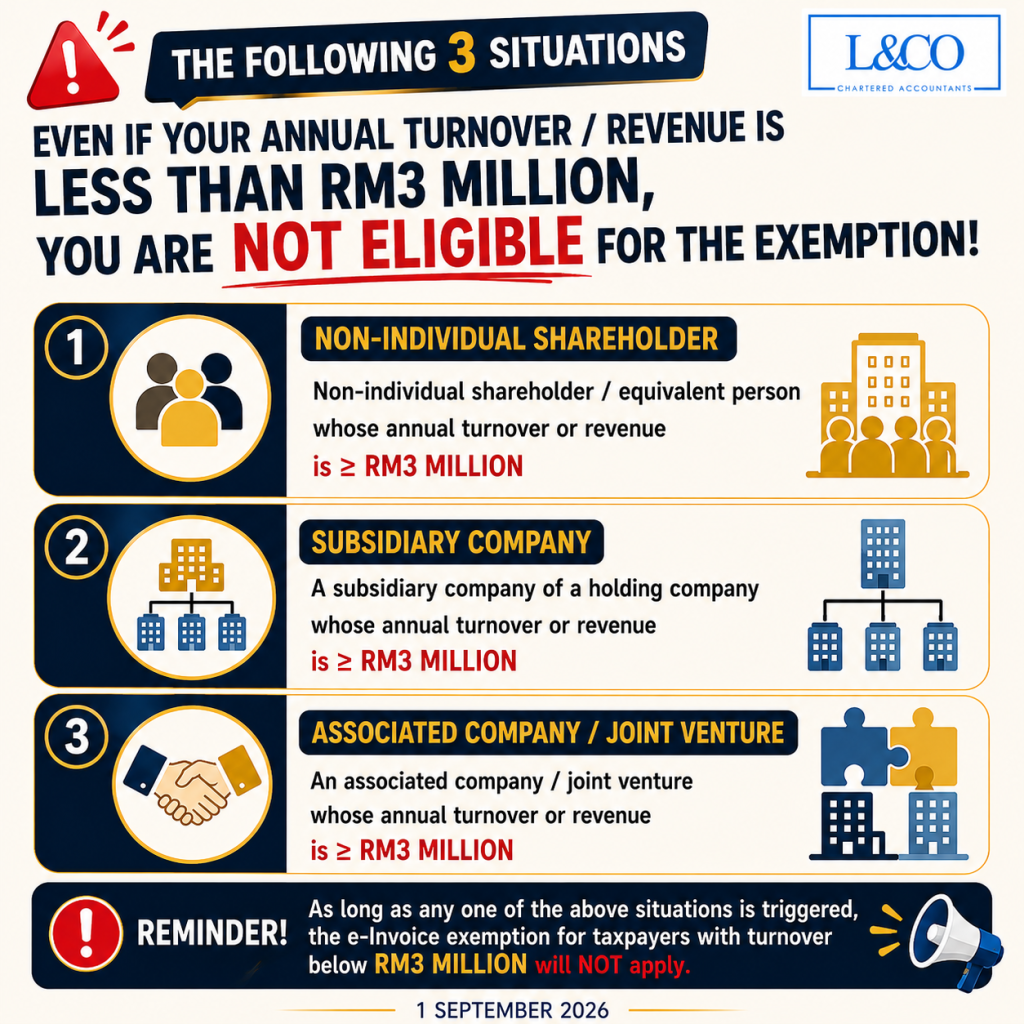
Three Situations Where the Exemption Does Not Apply
Under Section 1.6.10, the exemption for taxpayers below RM3 million does not apply in certain circumstances.
1. Non-Individual Shareholder
The taxpayer has a non-individual shareholder or equivalent whose annual turnover or revenue is RM3 million or more.
2. Holding Company / Subsidiary Relationship
The taxpayer is a subsidiary of a holding company whose annual turnover or revenue is RM3 million or more.
3. Related Company / Joint Venture
The taxpayer has a related company or joint venture whose annual turnover or revenue is RM3 million or more.
If any of the relevant exceptions apply, the e-Invoice exemption for taxpayers below RM3 million will not apply, even if the taxpayer’s own annual turnover or revenue is below the threshold.
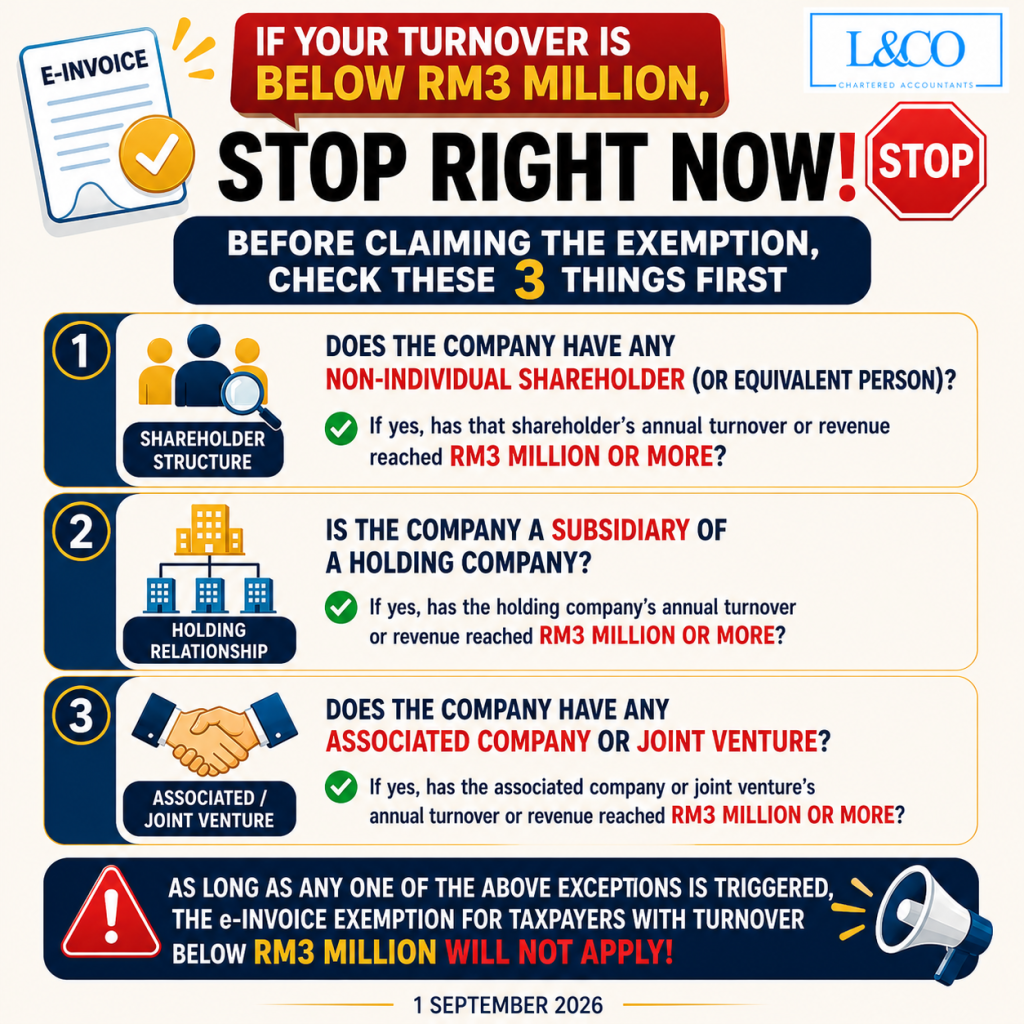
Three Checks to Make Before Relying on the Exemption
Businesses should review the following three areas before determining whether the RM3 million exemption applies.
① Shareholding Structure
Does the business have a non-individual shareholder or equivalent? If yes, does that shareholder have annual turnover or revenue of RM3 million or more?
② Holding Company Relationship
Is the business a subsidiary of a holding company? If yes, does the holding company have annual turnover or revenue of RM3 million or more?
③ Related Company / Joint Venture Relationship
Does the business have a related company or joint venture? If yes, does that entity have annual turnover or revenue of RM3 million or more?
Only after completing these checks can a business more accurately determine whether the e-Invoice exemption applies.
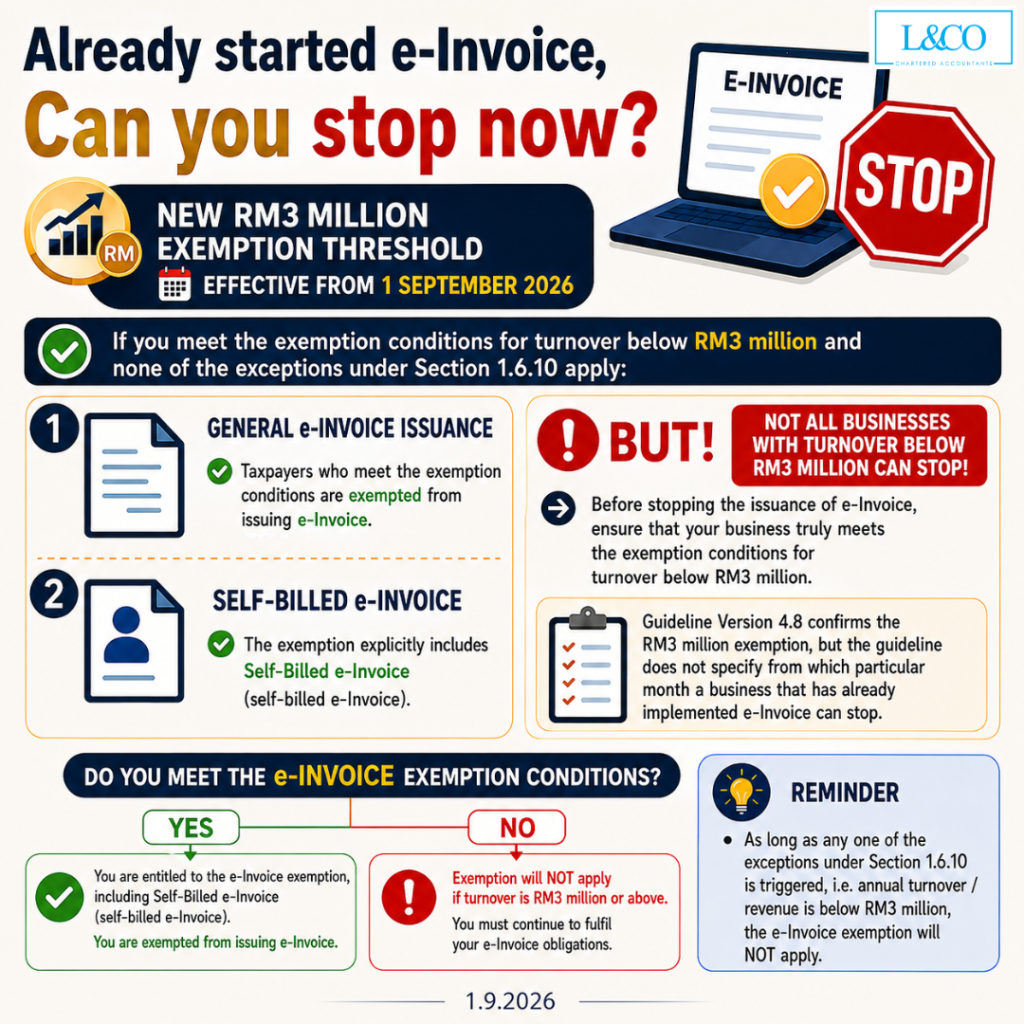
Already Implemented e-Invoice — Can You Stop Now?
If a business genuinely meets the latest exemption requirements and does not fall within any of the exceptions under Section 1.6.10, it may qualify for the e-Invoice exemption.
Importantly, the exemption expressly includes Self-Billed e-Invoices.
However, businesses that have already implemented e-Invoice may have another important question:
“Can we stop issuing e-Invoices immediately from this month?”
While Guideline Version 4.8 confirms the relevant exemption conditions, the Guideline itself does not clearly specify the particular month
from which businesses that have already implemented e-Invoice may stop issuing e-Invoices.
Therefore, businesses should first confirm that they genuinely meet the latest exemption requirements before stopping the issuance
of e-Invoices, rather than assuming that an annual turnover or revenue below RM3 million means they can immediately stop.
 (201706002678 & AF 002133)