
With the implementation of e-Invoicing, many businesses are uncertain whether self-billing is applicable in specific situations.
The answer largely depends on the nature of the supplier and the transaction.
The primary consideration is: Whether the supplier is carrying on a business activity
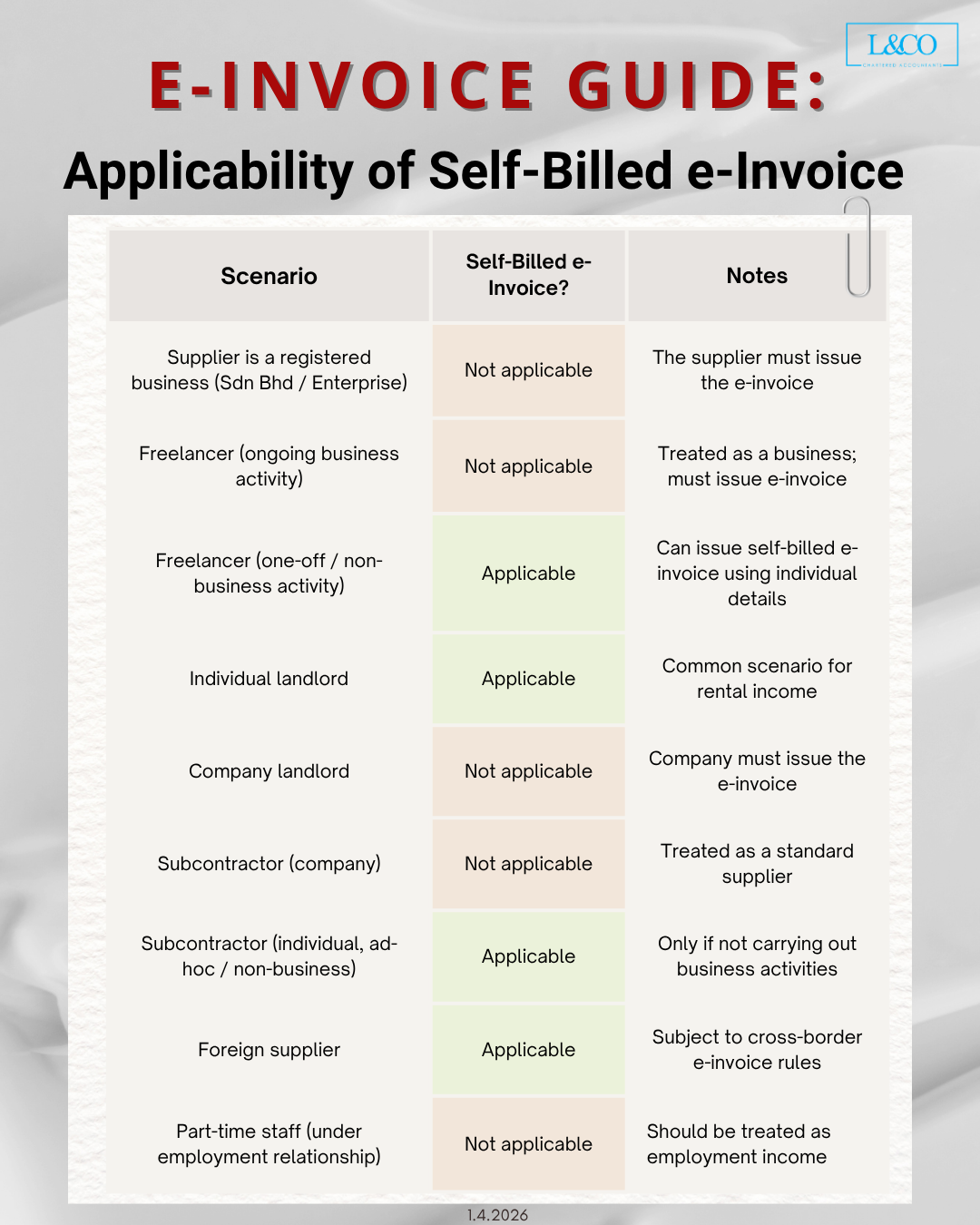
When Self-Billing is NOT Applicable
Self-billing is generally not allowed when dealing with:
- Registered businesses (Sdn Bhd / Enterprise)
- Freelancers with ongoing business activities
- Company-owned rental arrangements
- Corporate subcontractors
When Self-Billing is Applicable
Self-billing may be used when dealing with:
- Individuals earning one-off or non-recurring income
- Individual landlords (non-business)
- Temporary or ad-hoc individual service providers
Special Considerations
Certain transactions require additional assessment:
- Foreign suppliers: subject to cross-border tax rules
- Employees / staff claims: treated as payroll, not self-billing
Conclusion
The applicability of self-billing depends on distinguishing between:
- Business transactions
- Non-business individual transactions
Businesses should evaluate each case carefully to ensure compliance with tax regulations.
**Data Updated on 01.04.2026
 (201706002678 & AF 002133)