

Recently, GST has once again become a topic of discussion within Malaysia’s business community. For businesses, however, the key issue is not simply “what is the tax rate?” but rather how the tax system works and how it ultimately affects business costs, cash flow and market competitiveness.
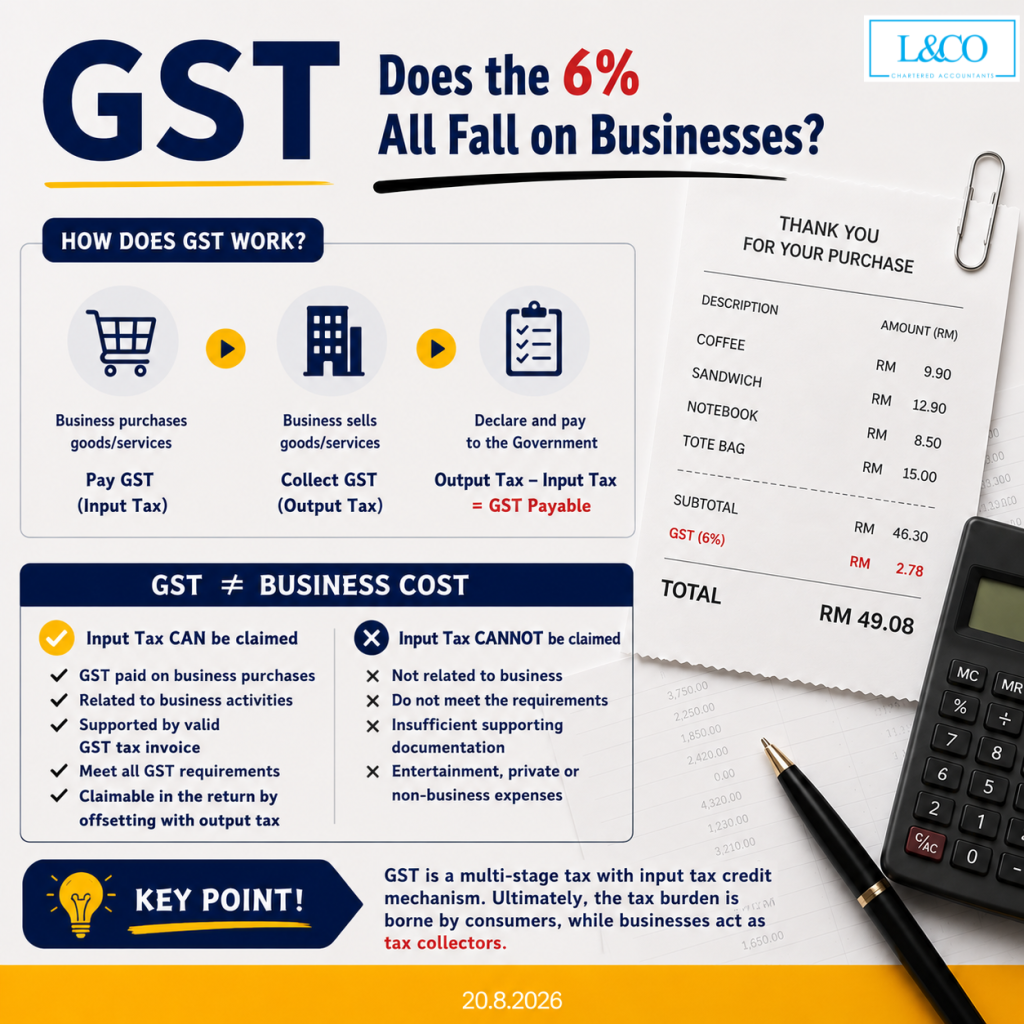
How Does GST Work?
GST is a multi-stage tax system. Businesses pay Input Tax when purchasing goods or services and collect Output Tax when making taxable sales.
Subject to the applicable conditions, businesses can claim eligible Input Tax against Output Tax and pay the difference to the Government.
Therefore, GST collected from customers does not necessarily represent a direct cost to the business. One of the key features of GST is the Input Tax Credit mechanism, which helps reduce the accumulation of tax throughout the supply chain.
Why Can SST Become a “Hidden Cost”?
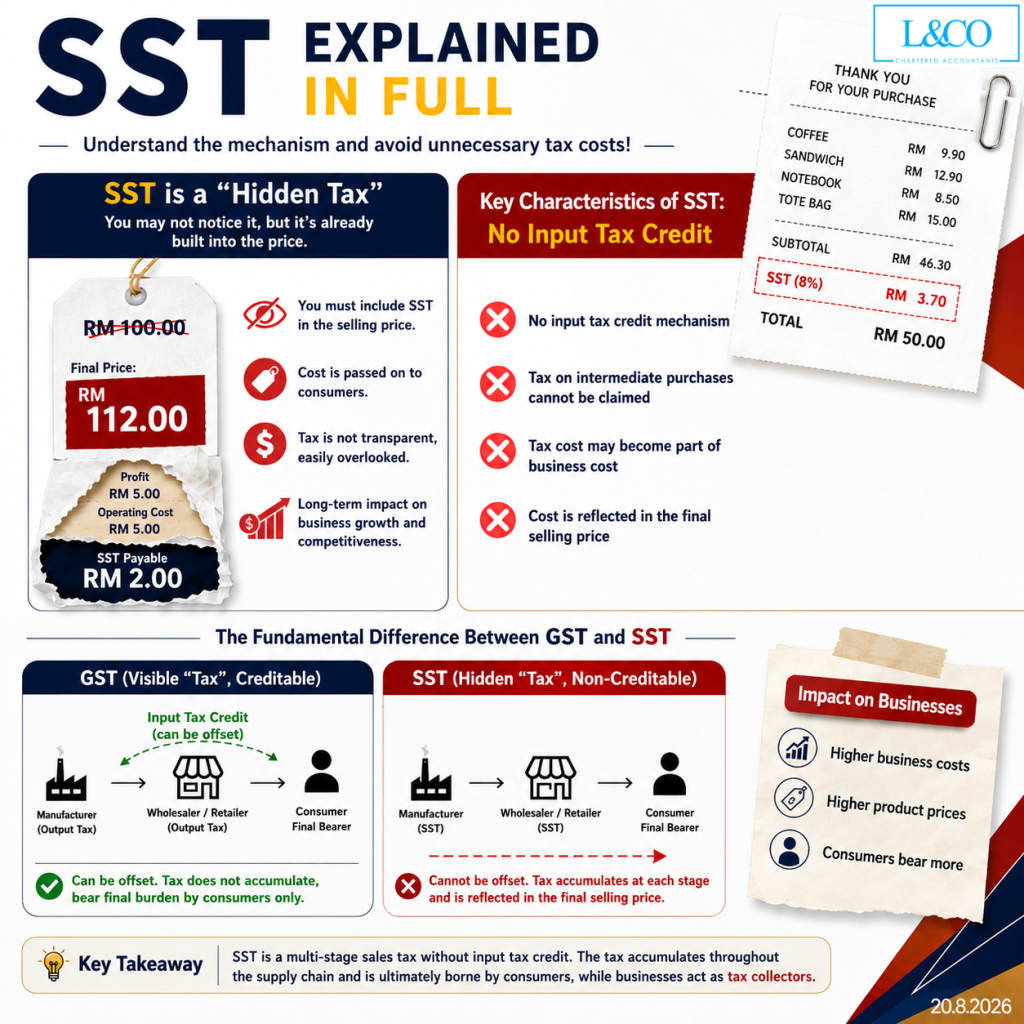
Unlike GST, SST generally does not provide the same broad Input Tax Credit mechanism.
When tax is incurred at an earlier stage of the supply chain, subsequent businesses may not be able to claim it as a credit. Instead, the tax may become part of their purchasing or operating costs.
As goods and services move through the supply chain, these costs may eventually be reflected in the final selling price.
In other words, consumers may not always see SST separately stated on every invoice, but the related tax cost may already be embedded in the price they pay.
Why Is GST Being Discussed Again?
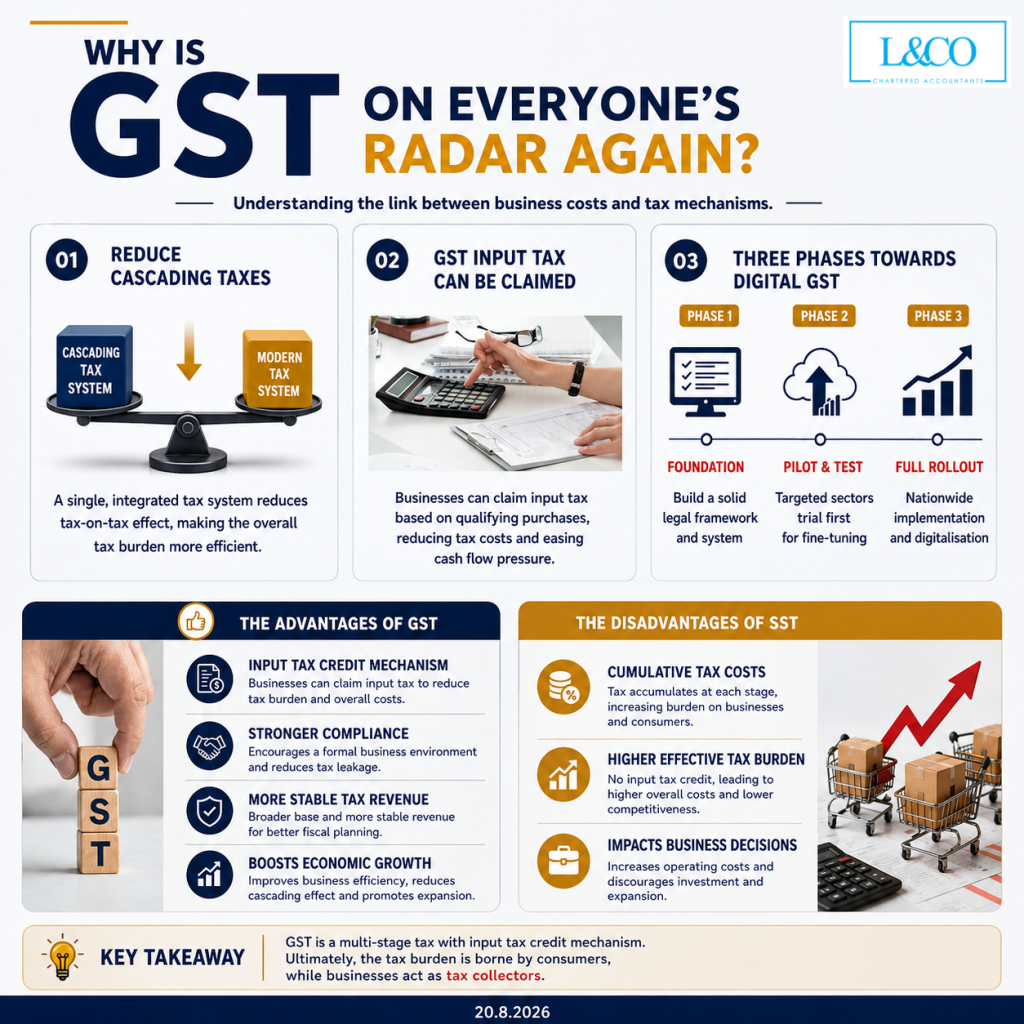
The renewed attention on GST goes beyond simply bringing back a previous tax system. From a business perspective, the broader discussion includes whether the tax system can:
- Reduce tax cascading and accumulated costs throughout the supply chain
- Allow eligible Input Tax Credit to reduce tax-related business costs
- Encourage stronger tax compliance and fairer market competition
- Support a more transparent and digitalised tax administration system
Ultimately, the key question is not simply whether GST or SST has a lower tax rate. What matters is how the tax mechanism balances government revenue, business costs, compliance requirements and the burden on consumers.
Key takeaway: The tax rate is only part of the picture. How the tax system works is what ultimately affects business costs and commercial decisions.
How Do GST and SST Affect Business Behaviour Differently?
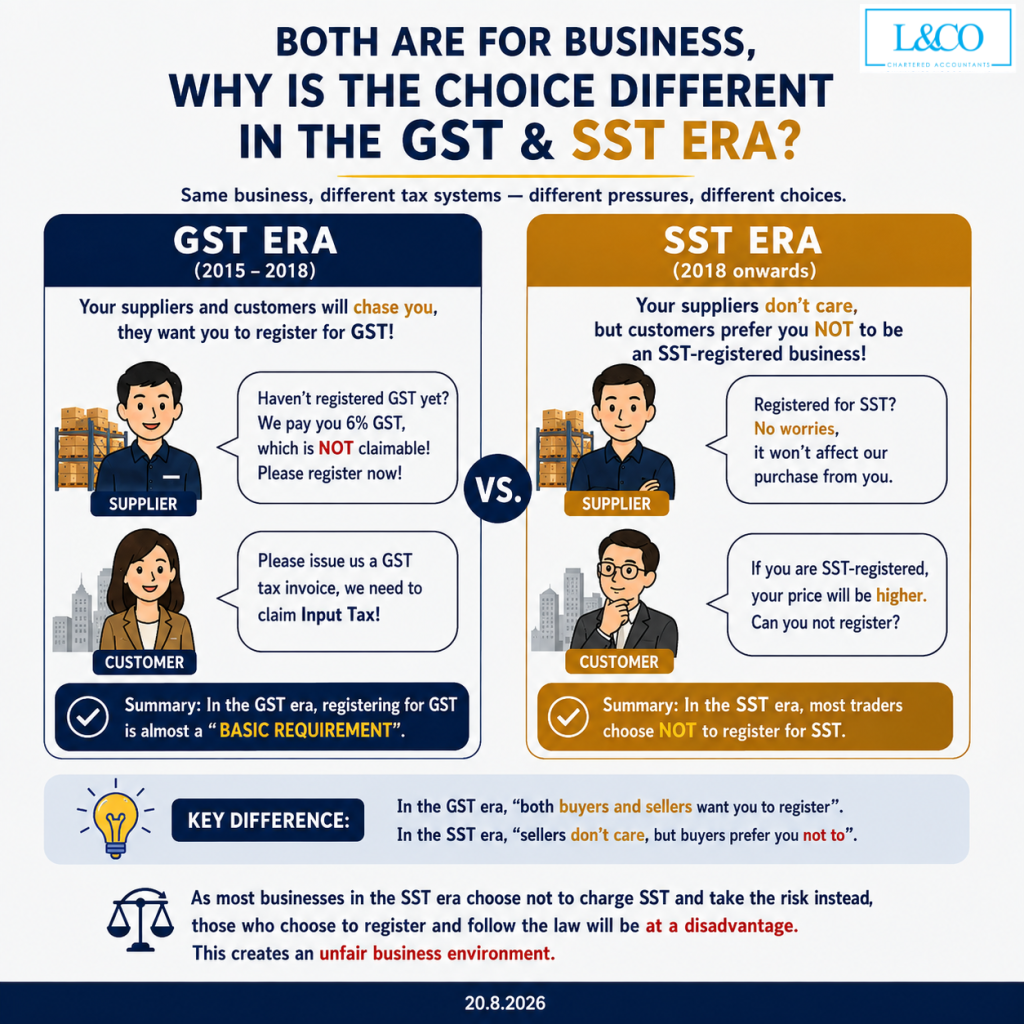
During the GST era, businesses generally paid greater attention to whether their suppliers and customers were GST-registered because eligible registered businesses could claim Input Tax Credit.
Under SST, the commercial dynamics can be different. Suppliers generally do not face the same Input Tax Credit considerations based on whether their customers are SST-registered. Customers, on the other hand, may be more concerned about whether SST could increase their purchasing costs.
This may also create a competitive issue. Businesses that are legally required to register and charge SST may face greater pricing pressure. If other businesses that are required to register fail to do so, compliant businesses could be placed at a competitive disadvantage, potentially creating an uneven business environment.
 (201706002678 & AF 002133)