

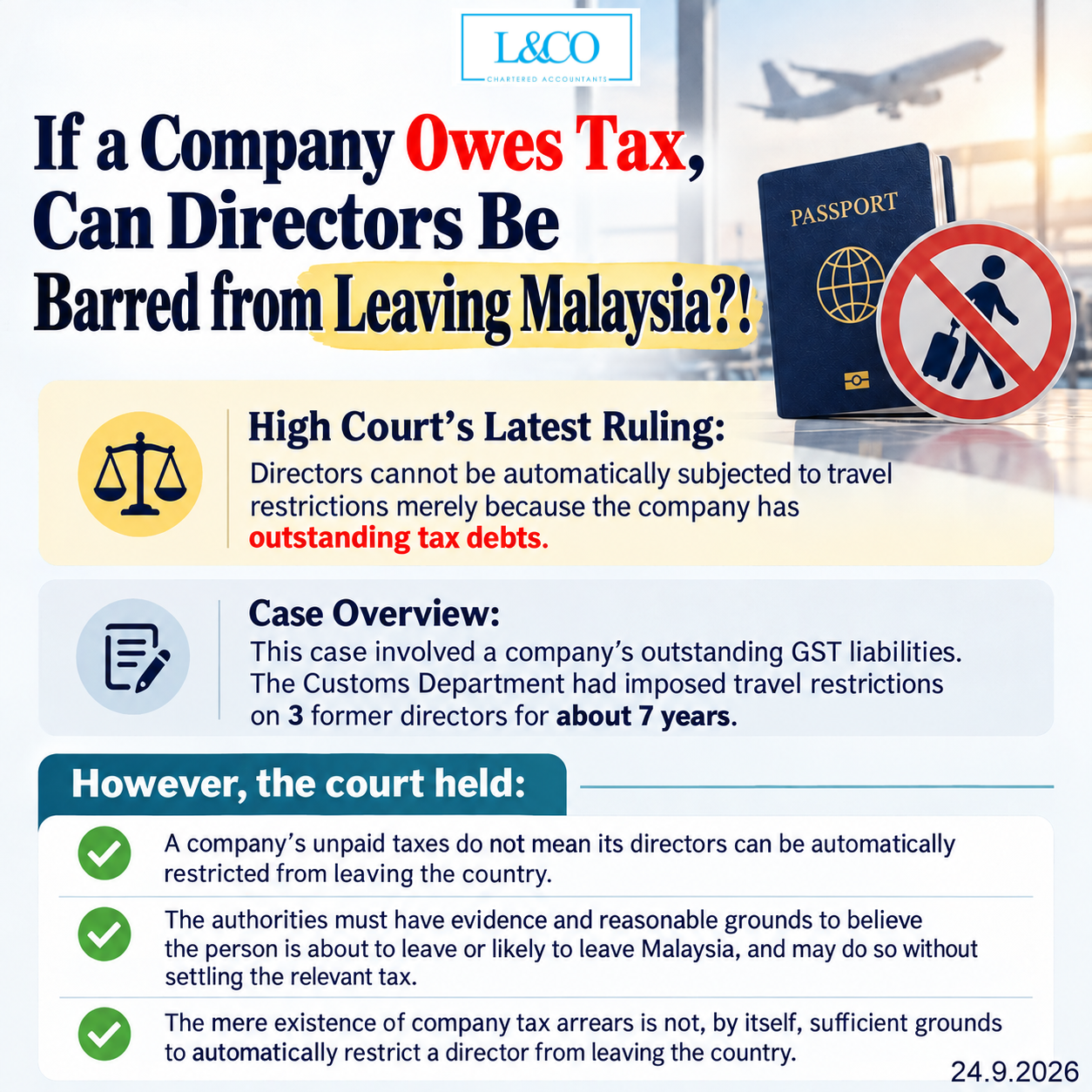
A recent Malaysian High Court decision involving outstanding GST liabilities clarified that a company’s tax debt does not automatically mean its directors can be restricted from leaving the country.
The court held that the authorities must have sufficient evidence and reasonable grounds to believe that the person is about to leave or is likely to leave Malaysia without settling the relevant tax. The mere existence of company tax arrears is not, by itself, enough to automatically impose a travel restriction on a director.
Key Facts of the Case
The case involved 3 former directors who had been subject to travel restrictions for about 7 years due to the company’s outstanding GST liabilities.
The key dates were:
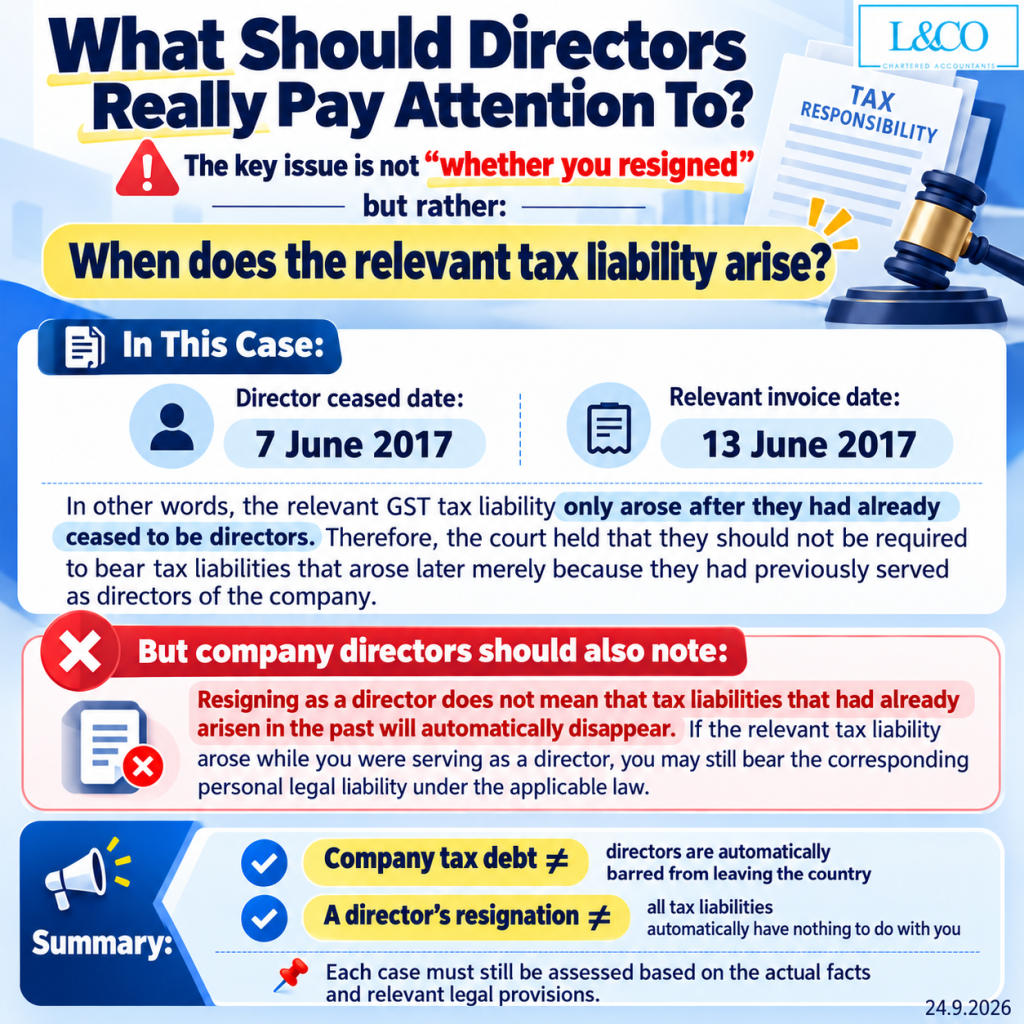
Director ceased date: 7 June 2017
Relevant invoice date: 13 June 2017
This means the relevant GST liability arose after they had already ceased to be directors.
The court therefore found that they should not be held responsible for tax liabilities that arose later merely because they had previously served as directors of the company.
What Should Directors Take Note Of?
This ruling does not mean that resigning as a director automatically removes all tax responsibilities.
If the relevant tax liability arose while you were serving as a director, you may still be subject to the applicable legal responsibilities.
In Short:
Company tax debt ≠ Directors are automatically barred from leaving Malaysia
Director resignation ≠ All tax liabilities automatically no longer concern you
The key issue is when the tax liability arose, the person’s status as a director at that time, and the applicable legal provisions.
Each case should still be assessed based on its specific facts and the relevant law.
 (201706002678 & AF 002133)